quarta-feira, 19 de abril de 2017

Audi e-tron Sportback concept

Gran Turismo Audi e-tron Sportback

Design study and technology demonstrator, electric car and power pack in the guise of a coupé: Audi presents a versatile concept car at the Auto Shanghai this spring. The four-door Gran Turismo Audi e-tron Sportback concept comes with a 320 kW electric drive. The formal idiom combines classic Audi elements with an array of trendsetting details: an electrifying architecture, tailored consistently to the technology and the package of the electric drive.


Emotional and powerful: Audi coupé design

In an initial encounter with new forms, the eye seeks out familiar elements. The design of the Audi e-tron Sportback offers these from every perspective – yet it also springs surprises with radically new lines and solutions. One example is the front end of the electric automobile. It still sports the Singleframe, which has been the distinguishing feature of every Audi since 2003.
Now, however, its design acknowledges that the function of a classic radiator grille has become obsolete: The electric motor at the front needs nothing like the amount of air that a combustion engine does – so the large opening at the front of the car is no longer required.


Behind the familiar octagon of the Singleframe, with its overtly wide, horizontal cut, there is a large-area panel painted in the body color. Its sculptural surface has a structured pattern emblazoned with the four rings logo – just like the grille of the classic Audi Singleframe.
The edges of the central surface are drawn back, allowing air to flow through at the top. The air inlet is bracketed again by an octagonal, black-painted frame that structures almost the entire width of the front end. Between the front lid extending low down, the front apron and the wheel arches, it combines with the light units to give this Audi an unmistakable face.


The four wheel arches with pointedly horizontal top edges extend well out from the cabin. They shape the conspicuous quattro architecture – not just by providing visual evidence of a wide track and dynamic potential, but also by binding the e-tron Sportback into the brand’s DNA. Large 23-inch wheels in a technical 6-spoke design highlight the confident presence of the imposingly dimensioned coupé. An exterior length of 4.90 meters (16.1 ft), a width of 1.98 meters (6.5 ft) and a height of 1.53 meters (5.0 ft) with a wheelbase of 2.93 meters (9.6 ft) position the e-tron Sportback in the C segment, close to the Audi A7.


Small cameras replace the exterior mirrors. This technology offers other advantages besides improved air flow and reduced wind noise. The blind spot of the physical exterior mirror is virtually eliminated, as is the obstruction to the diagonal forward view. The camera images are shown on separate displays in the doors. Audi is showing this technology as a concrete foretaste of the production version.


The rear section is kept very neat, with a wide light strip and a prominent separating edge. Here again, the determined horizontality of the quattro wheel arches dominates the proportions. The rear diffuser is visible below the bumper.
 

Power Unit and Performance


The Audi e-tron Sportback concept technology study uses three powerful electric motors – one on the front axle and two on the rear axle. Total output is 320 kW, with boosting enabling the driver to temporarily mobilize up to 370 kW.


The electric motors are highly efficient over a wide engine speed range, including at low and intermediate load. They thus combine emotional driving pleasure above all with a high range. The electric motors are liquid-cooled, as are the compact power electronics.


320 kilowatts of power – which can even reach 370 kW in the boost mode – provide a fitting level of propulsion, with the sprint from 0 to 100 km/h (62.1 mph) a done deal in just 4.5 seconds. With the battery’s energy content of 95 kilowatt-hours, its range is in excess of 500 kilometers (310.7 miles) (NEDC). More than 800 Nm (590.0 lb-ft) of torque are available in the boost mode. The sprint from zero to 100 km/h (62.1 mph) is completed in 4.5 seconds; the electronically limited top speed of 210 km/h (130.5 mph) is quickly reached. In the standard D driving program, the e-tron Sportback musters 320 kW.


The concept with the two electric motors on the rear axle offers major advantages when it comes to sporty handling. The Torque Control Manager, which works together with the Electronic Stabilization Control (ESC), actively and variably distributes the power between the wheels as necessary. This torque control provides for maximum dynamics and stability. Thanks to the virtually instantaneous response of the electric motors, the control actions are lightning-quick. The drive concept of the Audi e-tron Sportback concept adapts perfectly to every situation, whether involving transverse or longitudinal dynamics.

Interior

In its consciously light-colored interior the Audi e-tron Sportback concept offers a blend of functional clarity and reductive controls as a formal principle. Expansive touch-sensitive screens below the central display, on the center console and in the door trims supply information and interact with the on-board systems. Horizontal surfaces on the dashboard and the seemingly floating center console convey a sense of open perspectives for the occupants of the four individual seats.


The entire interior is focused on the driving area and controls. The large black-panel display surfaces behind the steering wheel and on the center console appear black when inactive, and turn live together with their display elements as soon as the car is started – a design that is reminiscent of the minimalist screen-based cockpits of modern commercial aircraft.


Price and Release Date

The production version of this pioneering electric SUV will appear on the market in 2018. The Audi e-tron Sportback concept will be followed by its production version in 2019.

Source: https://www.audi-mediacenter.com/en/audi-e-tron-sportback-concept-7638

Renault F1 RS 2027 Vision concept

Futuristic F1


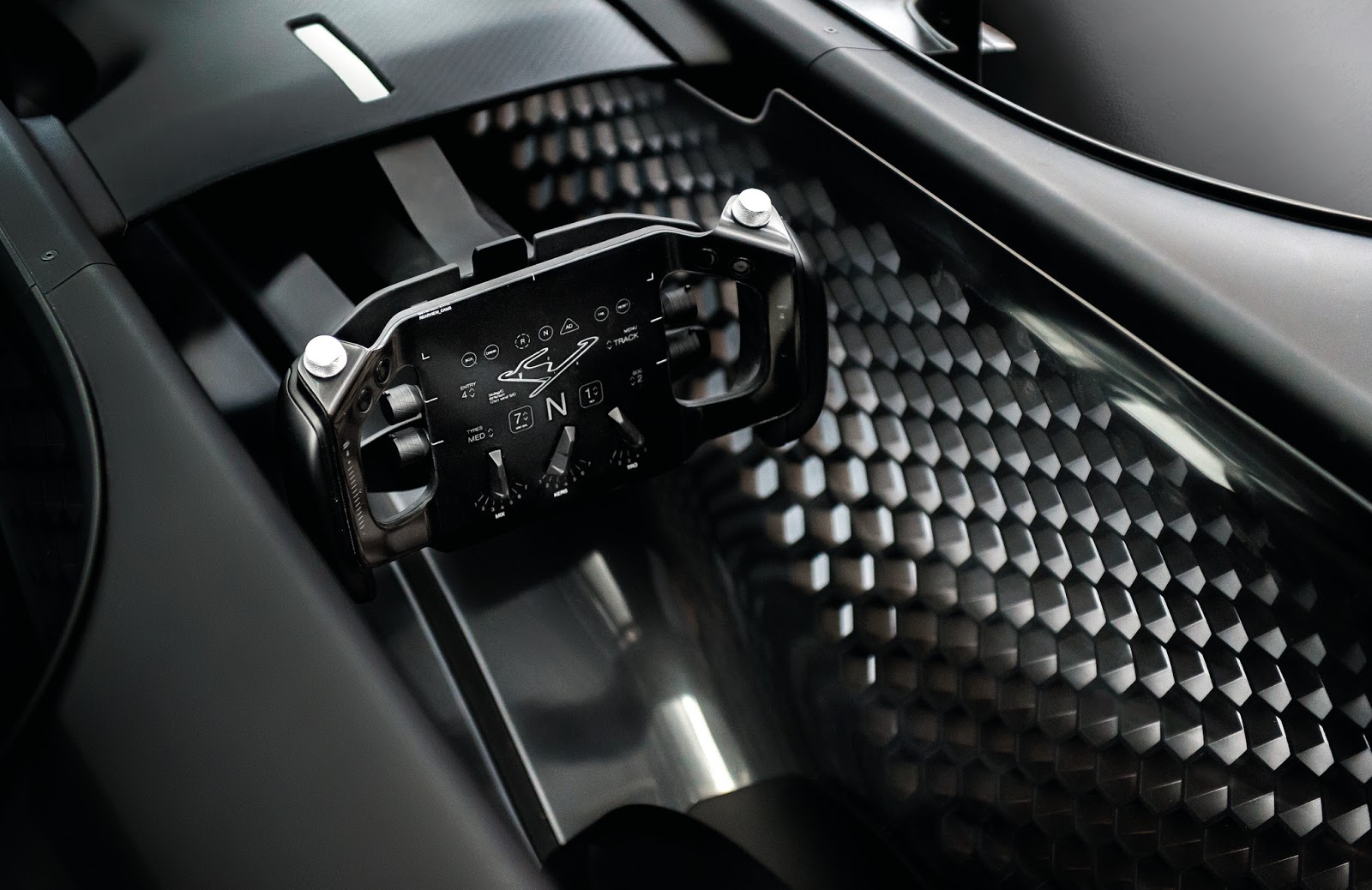
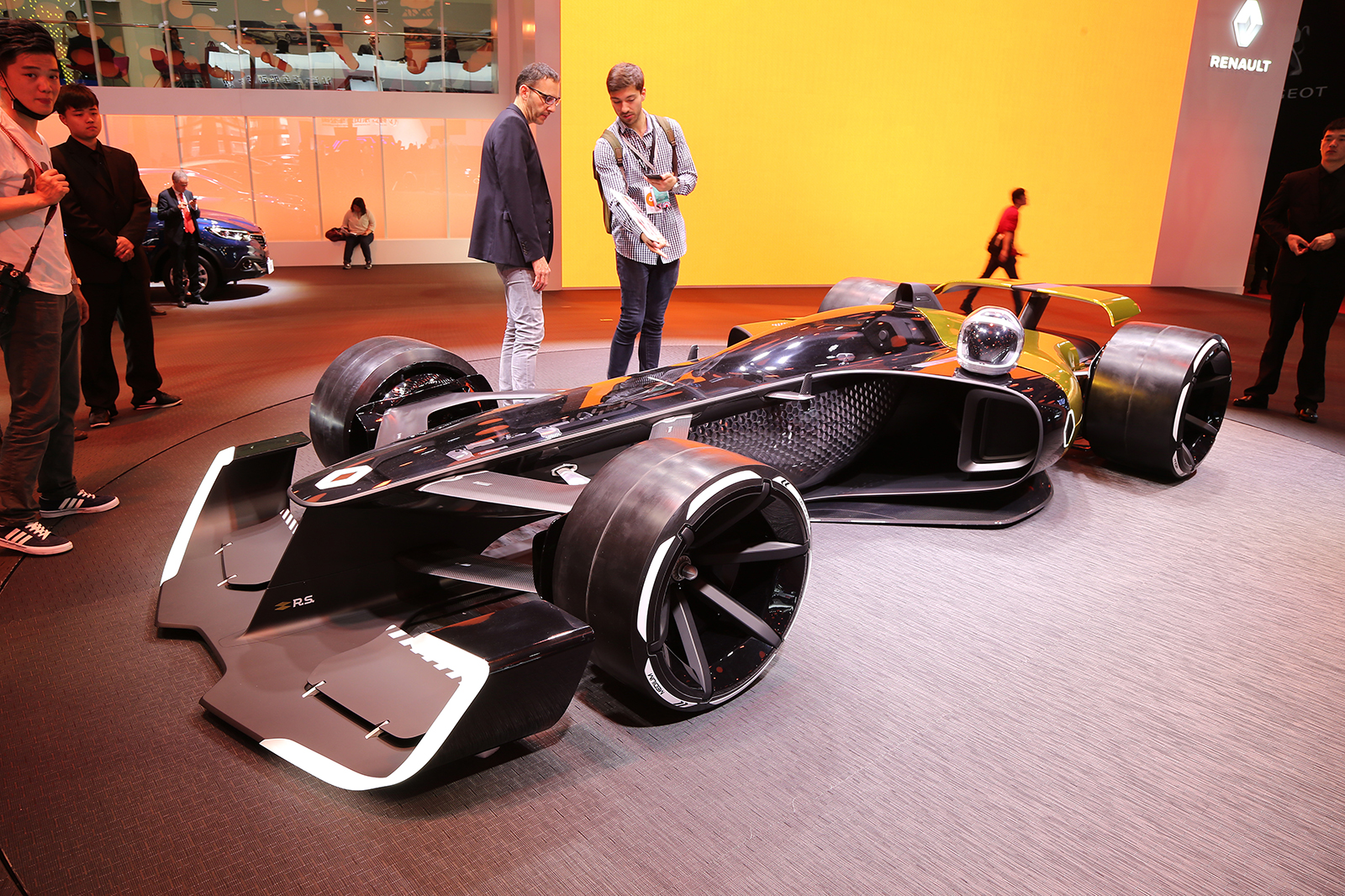
The Renault RS 2027 Vision concept is the French brand’s prediction of what motorsport’s top category racers could look like in 10 years time.


Revealed at the Shanghai motor show, the car uses a hybrid powertrain that produces 1341bhp (1 megawatt), giving the 600kg RS 2027 Vision a power-to-weight of 2235bhp/ton which is around 1000bhp/ton more than today’s racers.


The drivetrain is made up of a turbocharged V6 engine and two-part kinetic energy recovery system that produces up to 500kW – more than four times the output of today’s systems. It sends power to all four wheels and can be driven in all-electric mode in the pits and during safety car periods.


A transparent, covered cockpit is designed to be both safe and allow spectators to see the driver at work. Fans can also interact via social media to offer drivers power boosts -- similar to the Fan Boost concept currently used in Formula E. Oddly for a single seater, the RS 2027 Vision has LED front lights as well as lighting to show fans which lap it is on and when the car is running in electric mode to save fuel.


Active aerodynamics would also feature to work hand in hand with driver-controlled active suspension, which would also work to recover energy. Four-wheel steering is also allowed to improve the handling of the car.


The real prototype presented 19/04/2017 in Xangay Autoshow


More photos in this album : https://www.flickr.com/photos/renaultportugal/albums/72157682676889326


Sources: http://www.espn.com/f1/story/_/id/19190975/renault-releases-stunning-vision-f1-2027 and  https://www.autocar.co.uk/car-news/motor-shows-shanghai-auto-show/renault-rs-2027-vision-concept-car-revealed-shanghai

The 1000HP, 2017 Trans Am Super Duty

Unleashed at the NY AUTO Show


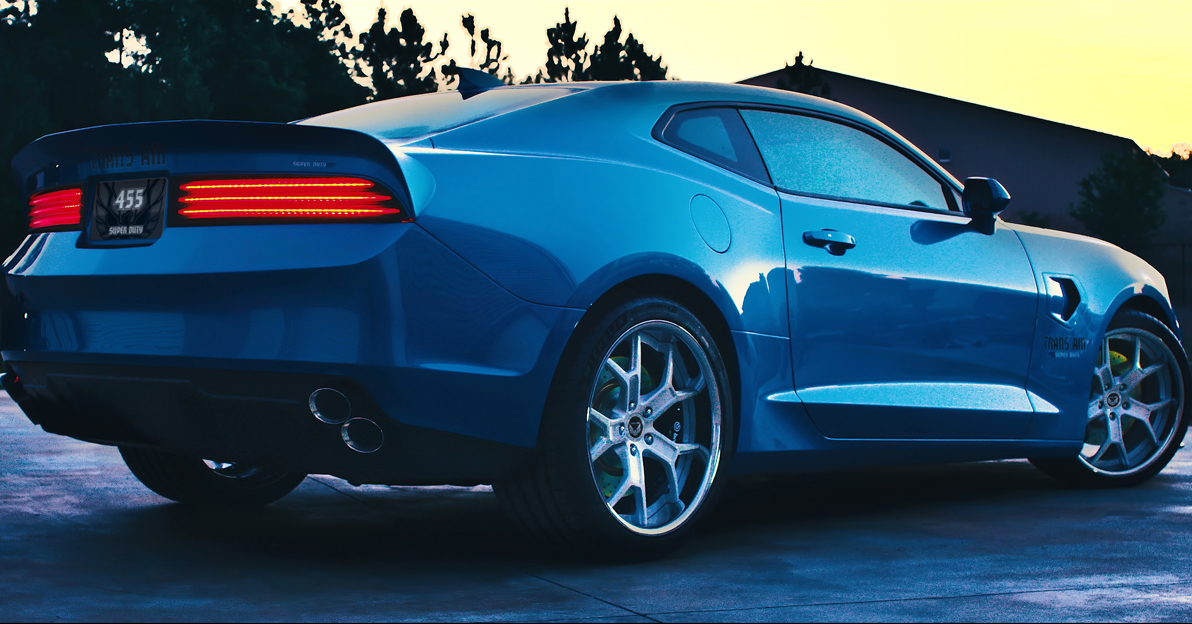
Trans Am Worldwide unveils the all-new 2017 Trans Am and Trans Am Super Duty April 14th at the New York Auto Show.


Trans Am Worldwide of Tallahassee, Florida, the exclusive manufacturer of the Trans Am brand through its distribution arm, Trans Am Depot, has completed their first new model on the Alpha platform. After a very successful and sold-out Bandit Edition, signed by the Bandit himself, Burt Reynolds, Trans Am Worldwide takes off the bridle and unleashes the all-new 2017 Trans Am (Outlaw Series) and the premier limited edition 1000hp Trans Am Super Duty.

Design

This year’s model is led by in-house chief designer and engineer Tom Sawyer. Sawyer, just like his namesake, brought a spirit of adventure and imagination to the project while engineering all aspects of the Alpha platform Trans Am. For graphical renderings, Tom collaborated with internationally acclaimed Automotive designer, Bo Zolland of Sweden , an award-winning designer of cars and boats who has worked with everyone from Detroit auto makers to Jay Leno. 


“ The new model is a complete re-design that features sleek body lines with masculine proportions and traditional retro styling. We are also offering optional glass t-tops this year but perhaps the most notable of this historical accomplishment is that we now join the ranks of only an exclusive few who offer a 1,000hp performance package in a production vehicle” Tod Warmack, Co-Founder.


Performance

For those with an affinity for power and speed, the 2017 premier model is the Trans Am Super Duty boasting 1000hp and 1046’lb tq. In tribute to this iconic muscle car legend, Trans Am Worldwide will limit this series to a strict edition of 50 supercars. The development of this performance collaboration is a three-way partnership with Magnuson Superchargers, Ventura, CA Trans Am Worldwide and a
premier NASCAR engine builder from Charlotte, North Carolina. 


Icona Vulcano - 100% Titanium body

Genesis

The Vulcano uses a consistent theme of dynamic triangles set in horizontal symmetry, reminiscent of the ICONA logo, which balance the dynamism of the volume. To connect the features and divide each part, tight lines complement the voluptuous shape, enhancing the car’s sensual power.


Alongside its astonishing performance and pedigree, the design of the Icona VULCANO is an evolution of the very advanced form language which was first introduced on the Icona Fuselage concept in 2011 by Samuel Chuffart, Icona’s design director. The aim of the design approach is to express the amazing capabilities of this extremely powerful car, while maintaining harmonious and generous shapes: bringing together the Beauty and the Beast.


The very first idea for the Vulcano was to use a front engine layout, and to use a strongly sculpted body side which would evacuate the hot air from the engine and reduce the air turbulence generated by the wheels. “As different ideas came together, the most challenging design issue which we faced was how to create a balance between power and beauty. When you’re trying to create a feeling of aesthetic harmony, you risk creating too many sweet lines, which decreases the feeling of power. On the other hand, if you make too much of the powerful features which are necessary to a super sports car such as its cooling cutouts and blades which manage the air flow, they become graphically too dominant, and this makes the car less beautiful. The way we found the right balance was usually by looking for the greatest simplicity” said Samuel Chuffart.


Exterior - Design

From the mesmerising molten lava and ferocious power of Mount Vesuvius to the frightening velocity of a stealth bomber and the sculptural curves of Zaha Hadid’s architectural masterpieces, the Icona Vulcano was inspired by symbols of power and beauty, both man-made and created by Mother Nature.


The Vulcano uses a consistent theme of dynamic triangles set in horizontal symmetry, reminiscent of the ICONA logo, which balance the dynamism of the volume. To connect the features and divide each part, tight lines compliment the voluptuous shape, enhancing the car’s sensual power. The body is all titanium, providing a light and resistant structure.


Talented young French designer Samuel Chuffart brings exceptional international experience to his role as design director of Icona. During his eight year tenure at Nissan Design in Europe and the US, Mr. Chuffart played an instrumental role in the creation and realization of the Nissan DNA which is known today. Mr. Chuffart then moved to Jaguar-Land Rover, before being selected for the coveted position of Chief Designer in Italy in 2008, successfully developing numerous production cars soon to be seen on the road.


Performance

The Vulcano Titanium was built by Cecomp, an Italian coachbuilder with a long and glorious history. The powertrain is the work of Claudio Lombardi, ex- Scuderia Ferrari director and mastermind of numerous world champion cars. Also key was Mario Cavagnero, the man behind the Lancia Racing team and father of the engine of many championship-winning cars, such as the famous Lancia Integrale and 037, as well as the complete Peugeot T16 family.

In his words, “A champion car is made from drivability, how well a man can feel the machine and the real performance comes with the art of bringing the optimum amount of power to the wheels.” 

Some numbers...

0-200Kmh in 8.8 secs | 670 hp | 220 mph | 840 N/m


Capable to be tuned to well over 1.000 horsepower should the owner demand it, the optimized 670 horsepower and 840 N/m of its supercharged V8 is coupled with a paddle-shift close ratio gearbox from Automac Modena, allowing 0 to 60 miles/hr in 2.8 seconds and 120 miles/hr in 8.8 seconds.


The shift times, the ratios and differential gear have been optimized and calibrated in order to achieve the best balance in the distribution of power. This system allows to eliminate the traditional gear lever replacing it with the pades connected to the sensors on the steering column. The result achieves an extreme simplicity of combined driving at a considerable speed of change by only touching the blades with fingers, without ever taking hands off the steering wheel.


Also the geometry of the suspensions have been revolutionized in respect of the traditional solutions.

The shock absorbers are fully adjustable in rebound and compression, and this makes the choice possible between several possible settings in order to identify the most suitable calibration to the drive type. The coil coaxial springs (which replace the typical leaf springs) combined with the new shock absorber has a tunable spring preload, this allows proper modification of heights and a better weight distribution on the front and rear. Front and rear anti-roll bars, widely adjustable, allow to vary the stiffness depending on use. The naked titanium body was sculptured by CECOMP involving more than 10,000 hours of hand-crafted work in the most pure form.


Interior

Made principally from carbon fibre and black alcantara and with fully adjustable leather bucket seats, the high tech interior has a race inspired feel. The interior design is driver-oriented, with functions such as GPS, radio and car diagnostics combined in a single large touchscreen, while all elements in the overall design have been integrated in a sophisticated and refined way.


The carbon fiber seats are the latest design made by the supercar reference name SABELT, Torino. The one off interior trim is made using the best Alcatara and leather from Poltrona Frau.


The meticulous workmanship comes from D’Arras, a company which works only for the most demanding customers of rare cars and are able to combine the most high-tech machine work with traditional hand skills.

Price

Around 2.7 million dolars!

Source: http://vulcanotitanium.com/en/vulcano-titanium/