Mostrar mensagens com a etiqueta concept car. Mostrar todas as mensagens

quinta-feira, 27 de abril de 2017

Toroidion - new electric concept car from Finland

The quest for an innovative electric supercar

 Toroidion was established in 2011 to develop an entirely new electric powertrain that would be competitive at the Le Mans 24-hour race.


The founder Pasi Pennanen has spent the past 20 years in the automotive industry developing and building concept cars and production models.


“There is no such thing as “it cannot be done”. I believe in pushing the boundaries in product development and design.”


The Toroidion engineering team has now produced the first proof-of-concept electric supercar powered by our revolutionary high-performance powertrain. The Toroidion 1MW Concept car is street-legal and has been designed, developed and built entirely in-house in Finland.


As soon as the tests have been performed, we will reveal more about the performance of our innovative patented powertrain and lightweight concept car.


 The Toroidion all-new electric powertrain has been designed to be scalable in power for different applications while remaining safe to use and service.
The high-performance battery of the Toroidion powertrain is as easily replaced in the pit-lane as it is in the home garage.


The Toroidion 1MW Concept car and our revolutionary powertrain were launched on 16 April 2015 at Top Marques Monaco by H.S.H Prince Albert II of Monaco.

The Interior


Source: http://toroidion.com

quarta-feira, 19 de abril de 2017

Audi e-tron Sportback concept

Gran Turismo Audi e-tron Sportback

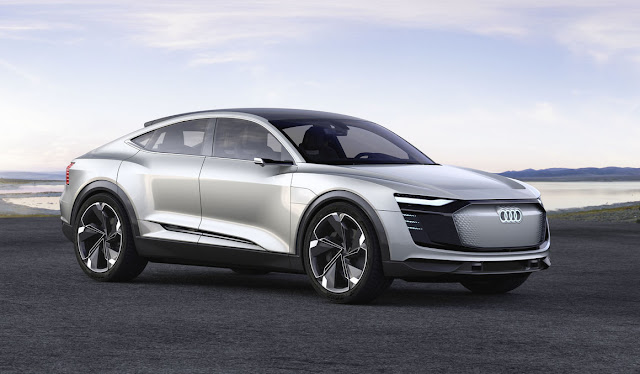
Design study and technology demonstrator, electric car and power pack in the guise of a coupé: Audi presents a versatile concept car at the Auto Shanghai this spring. The four-door Gran Turismo Audi e-tron Sportback concept comes with a 320 kW electric drive. The formal idiom combines classic Audi elements with an array of trendsetting details: an electrifying architecture, tailored consistently to the technology and the package of the electric drive.


Emotional and powerful: Audi coupé design

In an initial encounter with new forms, the eye seeks out familiar elements. The design of the Audi e-tron Sportback offers these from every perspective – yet it also springs surprises with radically new lines and solutions. One example is the front end of the electric automobile. It still sports the Singleframe, which has been the distinguishing feature of every Audi since 2003.
Now, however, its design acknowledges that the function of a classic radiator grille has become obsolete: The electric motor at the front needs nothing like the amount of air that a combustion engine does – so the large opening at the front of the car is no longer required.


Behind the familiar octagon of the Singleframe, with its overtly wide, horizontal cut, there is a large-area panel painted in the body color. Its sculptural surface has a structured pattern emblazoned with the four rings logo – just like the grille of the classic Audi Singleframe.
The edges of the central surface are drawn back, allowing air to flow through at the top. The air inlet is bracketed again by an octagonal, black-painted frame that structures almost the entire width of the front end. Between the front lid extending low down, the front apron and the wheel arches, it combines with the light units to give this Audi an unmistakable face.


The four wheel arches with pointedly horizontal top edges extend well out from the cabin. They shape the conspicuous quattro architecture – not just by providing visual evidence of a wide track and dynamic potential, but also by binding the e-tron Sportback into the brand’s DNA. Large 23-inch wheels in a technical 6-spoke design highlight the confident presence of the imposingly dimensioned coupé. An exterior length of 4.90 meters (16.1 ft), a width of 1.98 meters (6.5 ft) and a height of 1.53 meters (5.0 ft) with a wheelbase of 2.93 meters (9.6 ft) position the e-tron Sportback in the C segment, close to the Audi A7.

Small cameras replace the exterior mirrors. This technology offers other advantages besides improved air flow and reduced wind noise. The blind spot of the physical exterior mirror is virtually eliminated, as is the obstruction to the diagonal forward view. The camera images are shown on separate displays in the doors. Audi is showing this technology as a concrete foretaste of the production version.


The rear section is kept very neat, with a wide light strip and a prominent separating edge. Here again, the determined horizontality of the quattro wheel arches dominates the proportions. The rear diffuser is visible below the bumper.
 

Power Unit and Performance


The Audi e-tron Sportback concept technology study uses three powerful electric motors – one on the front axle and two on the rear axle. Total output is 320 kW, with boosting enabling the driver to temporarily mobilize up to 370 kW.


The electric motors are highly efficient over a wide engine speed range, including at low and intermediate load. They thus combine emotional driving pleasure above all with a high range. The electric motors are liquid-cooled, as are the compact power electronics.


320 kilowatts of power – which can even reach 370 kW in the boost mode – provide a fitting level of propulsion, with the sprint from 0 to 100 km/h (62.1 mph) a done deal in just 4.5 seconds. With the battery’s energy content of 95 kilowatt-hours, its range is in excess of 500 kilometers (310.7 miles) (NEDC). More than 800 Nm (590.0 lb-ft) of torque are available in the boost mode. The sprint from zero to 100 km/h (62.1 mph) is completed in 4.5 seconds; the electronically limited top speed of 210 km/h (130.5 mph) is quickly reached. In the standard D driving program, the e-tron Sportback musters 320 kW.


The concept with the two electric motors on the rear axle offers major advantages when it comes to sporty handling. The Torque Control Manager, which works together with the Electronic Stabilization Control (ESC), actively and variably distributes the power between the wheels as necessary. This torque control provides for maximum dynamics and stability. Thanks to the virtually instantaneous response of the electric motors, the control actions are lightning-quick. The drive concept of the Audi e-tron Sportback concept adapts perfectly to every situation, whether involving transverse or longitudinal dynamics.

Interior

In its consciously light-colored interior the Audi e-tron Sportback concept offers a blend of functional clarity and reductive controls as a formal principle. Expansive touch-sensitive screens below the central display, on the center console and in the door trims supply information and interact with the on-board systems. Horizontal surfaces on the dashboard and the seemingly floating center console convey a sense of open perspectives for the occupants of the four individual seats.


The entire interior is focused on the driving area and controls. The large black-panel display surfaces behind the steering wheel and on the center console appear black when inactive, and turn live together with their display elements as soon as the car is started – a design that is reminiscent of the minimalist screen-based cockpits of modern commercial aircraft.


Price and Release Date

The production version of this pioneering electric SUV will appear on the market in 2018. The Audi e-tron Sportback concept will be followed by its production version in 2019.

Source: https://www.audi-mediacenter.com/en/audi-e-tron-sportback-concept-7638

Renault F1 RS 2027 Vision concept

Futuristic F1


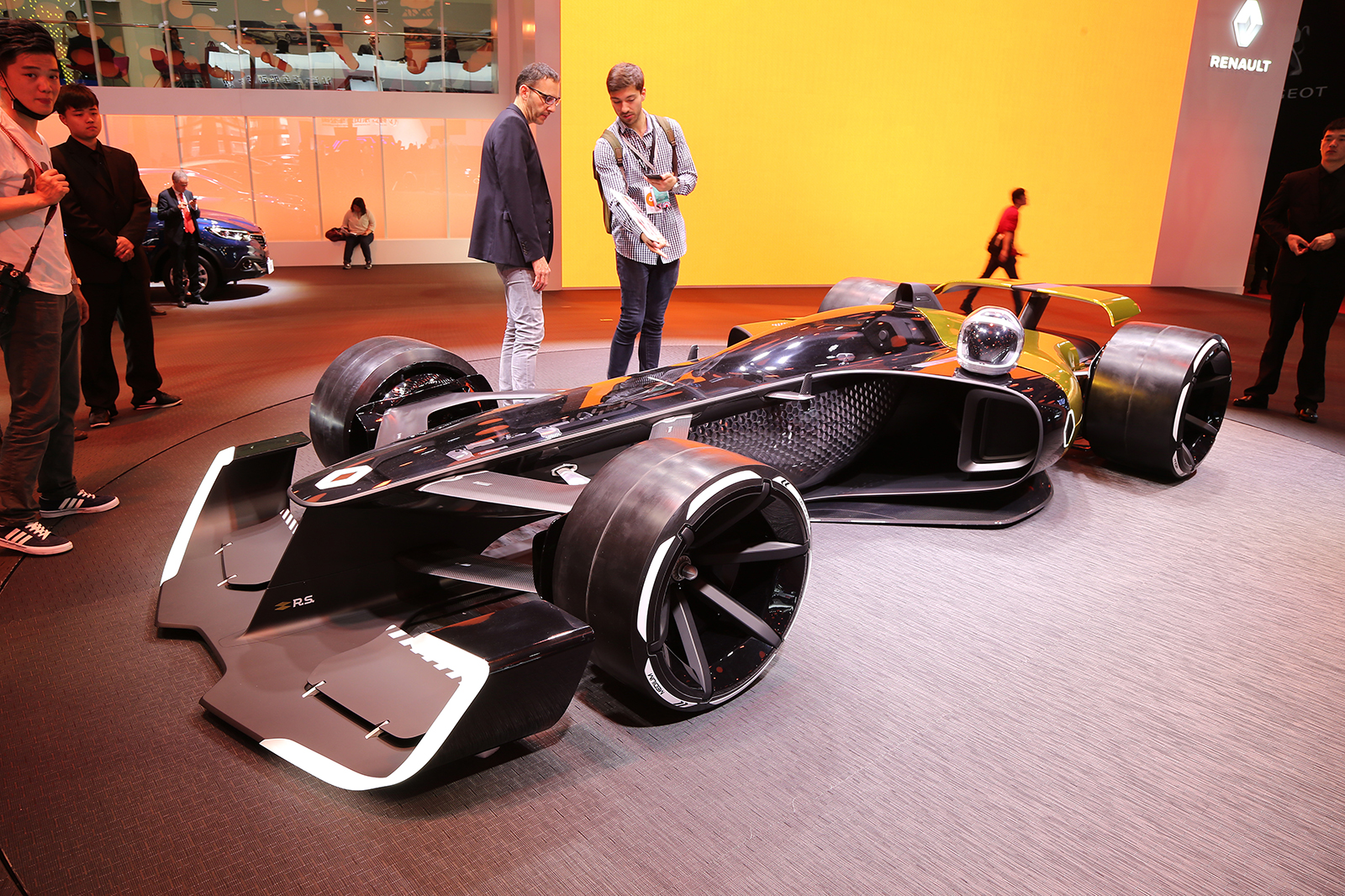
The Renault RS 2027 Vision concept is the French brand’s prediction of what motorsport’s top category racers could look like in 10 years time.


Revealed at the Shanghai motor show, the car uses a hybrid powertrain that produces 1341bhp (1 megawatt), giving the 600kg RS 2027 Vision a power-to-weight of 2235bhp/ton which is around 1000bhp/ton more than today’s racers.


The drivetrain is made up of a turbocharged V6 engine and two-part kinetic energy recovery system that produces up to 500kW – more than four times the output of today’s systems. It sends power to all four wheels and can be driven in all-electric mode in the pits and during safety car periods.


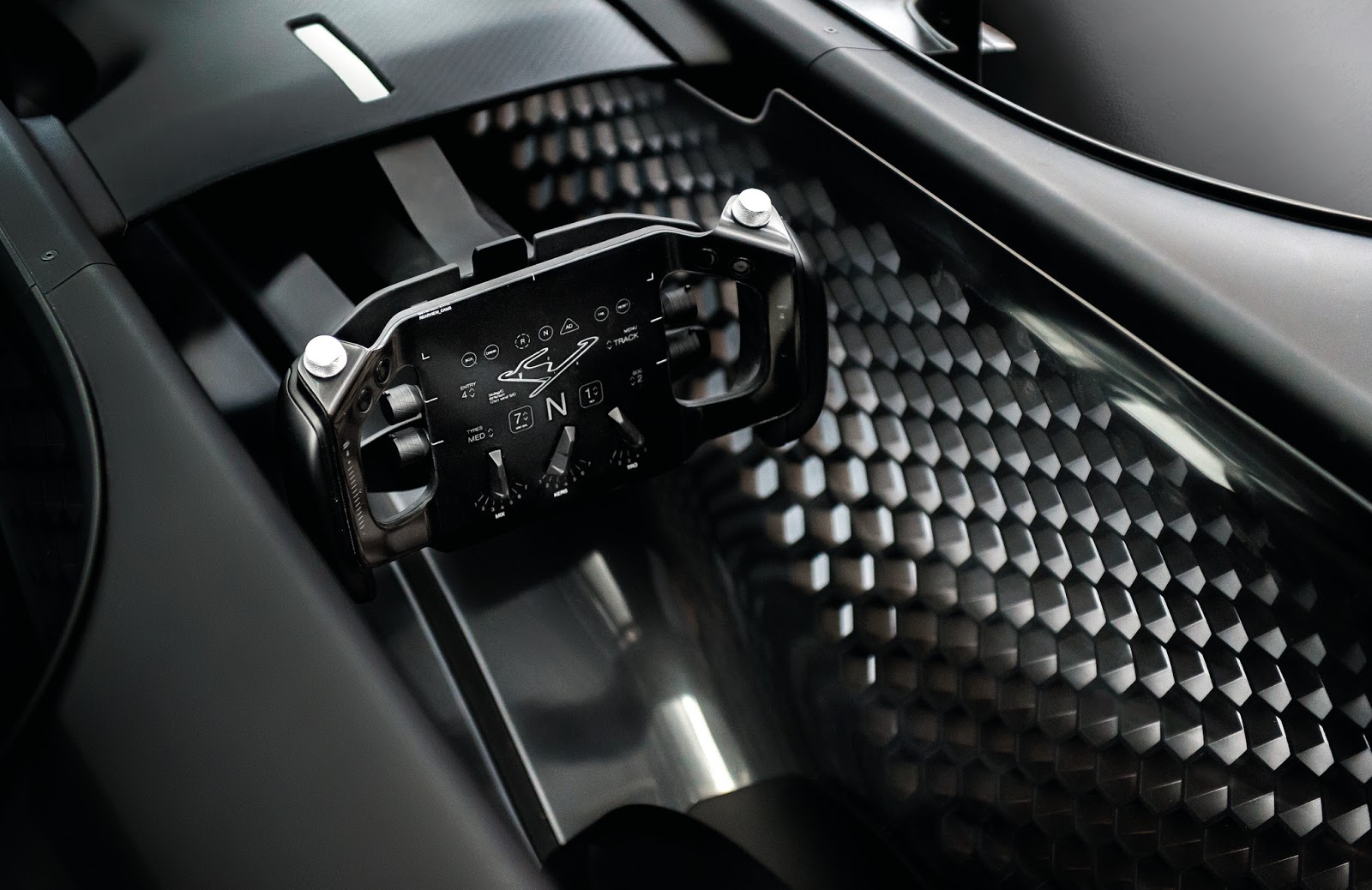
A transparent, covered cockpit is designed to be both safe and allow spectators to see the driver at work. Fans can also interact via social media to offer drivers power boosts -- similar to the Fan Boost concept currently used in Formula E. Oddly for a single seater, the RS 2027 Vision has LED front lights as well as lighting to show fans which lap it is on and when the car is running in electric mode to save fuel.


Active aerodynamics would also feature to work hand in hand with driver-controlled active suspension, which would also work to recover energy. Four-wheel steering is also allowed to improve the handling of the car.


The real prototype presented 19/04/2017 in Xangay Autoshow


More photos in this album : https://www.flickr.com/photos/renaultportugal/albums/72157682676889326


Sources: http://www.espn.com/f1/story/_/id/19190975/renault-releases-stunning-vision-f1-2027 and  https://www.autocar.co.uk/car-news/motor-shows-shanghai-auto-show/renault-rs-2027-vision-concept-car-revealed-shanghai

Ferrari Sergio - Concept car

Exclusivity, innovation and passion

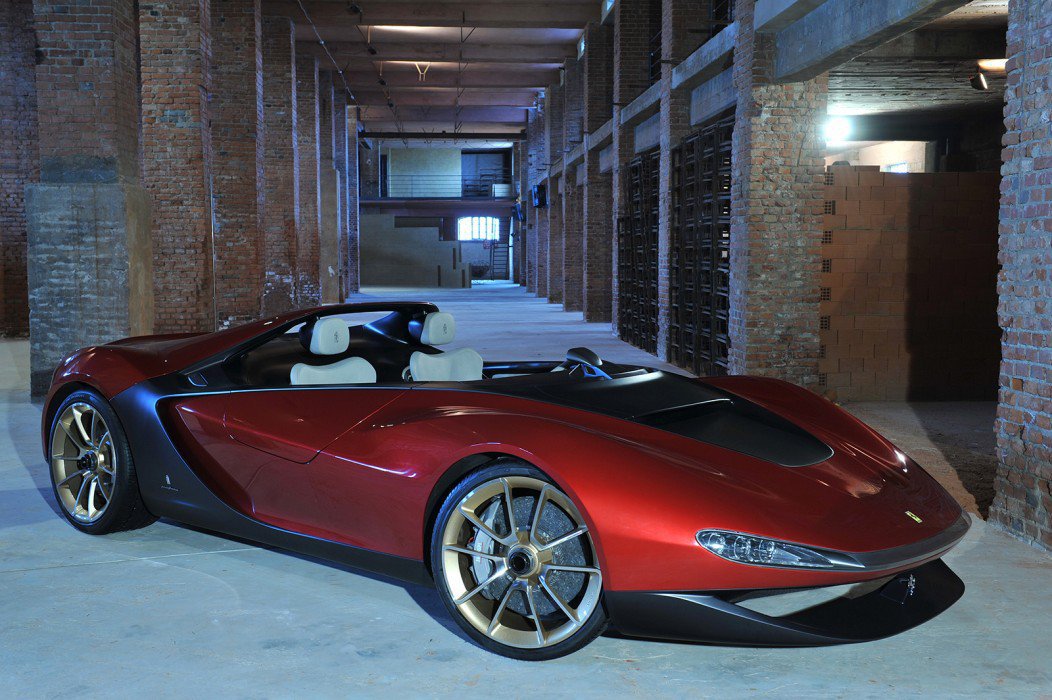
It is named Sergio, after the man who led Pininfarina for 40 years and conceived some of the greatest car legends. It is the new, amazing concept car created to celebrate the Life Senator Sergio Pininfarina. At its world debut at the Geneva Motor Show 2013, the Sergio joins the brand that has so marked the history of Pininfarina: Ferrari. The Sergio, in fact, is a two-seater barchetta that looks to the future, very compact, very sporty, racy, pure and sensual. An exercise that Pininfarina decided to undertake on Ferrari 458 Spider mechanicals. Its formal interpretation is absolutely free, in the best tradition of the Pininfarina research which has produced so many Ferrari-based concept cars or unique models now recognised as masterpieces.
 

The result is a modern, organic view of the mid-rear-engined two-seater barchetta. The willingness to revisit volumes and surface treatments in a subliminal way emerges with the Sergio, which evokes the spirit of Pininfarina's best achievements for Ferrari of the ‘60s and ‘70s. A radical object, unique and essential, which rejects the superfluous and is performance-oriented. A real open air car with an explicit nod to racing cars, in the sense that a cupola is not fitted to protect occupants, for which two helmets are provided. Its exclusivity and development on the basis of a production car, in fact, sets the Sergio in the tradition of the great Pininfarina custom-made cars specifically designed for "special" clients. It is therefore a real car that can easily be produced in limited series of a few units.


A custom-made car designed to convey emotions


The Sergio is distinguished by a very simple and clear style, that becomes memorable the moment you look at it. Proportions pushed to the extreme, a dynamic front volume penetrating into a rear that is projected forward, a sculpted, three-dimensional interpretation of the typical barchetta. The composition of the two body masses through a longitudinal black insert becomes the design's guideline.


The Sergio also expresses an iconicity linked to ‘60s Ferraris proposing bulging and sensual wings inspired by those of sports cars and racing cars of that era, achieved by compacting all volume accessories as much as possible. The extreme lightness of the Sergio, which appears to float with the front up, is a direct result of aerodynamic research.


The front semi-floating development with the spoiler under the front, expresses aesthetic force and is at the same time functional for the stabilisation of the aerodynamic load and the heat exchange. The aerodynamic deflector in front of the cockpit also creates a virtual windscreen through the deviation of the air flow, protecting the passengers from turbulence.


The roll bar, designed as a wing surface, is perfectly tuned to the evolution of the flow coming from the front, adding a further down force effect. Finally, the rear nolder and the extractor close the design effectively and functionally. Still on the subject of aerodynamics, even the rear-view mirror takes on a fluid form that, given the flow of the front baffle, helps to divert air from the heads of the passengers.


To enhance the formal purity of the Pininfarina style criterion, all the technical parts of the Sergio (handles, fins, air intake holes) are concentrated in dark parts of the body, leaving the red painted parts free.


The Numbers


Maximum length: 4550 mm
Maximum width: 1940 mm
Maximum height: 1140 mm
Boot capacity: 110 litres
Power train (original Ferrari 458 Spider): 4499cc V8; Sequential gearbox 7M + RM
Package: 2 doors, 2 seats
Chassis: original 458 Spider
Cx XS: about 5% lower than the original car
Weight: about 1280 kg
Maximum speed: approx 320 km/h
Acceleration from 0 to 100: less than 3.4 seconds


The Interior


Source: http://www.pininfarina.com/en/sergio