Mostrar mensagens com a etiqueta supercars. Mostrar todas as mensagens

quarta-feira, 20 de setembro de 2017

Mercedes-AMG Project ONE


mercedes-amg-project-one-formula-1-technology-for-the-road


World premiere at the IAA.

The Mercedes-AMG Project ONE will celebrate its world premiere at the International Motor Show (IAA) in Frankfurt/Main: for the first time, the two-seater supersports show car brings the very latest and efficient, fully-fledged Formula 1 hybrid technology from the race track to the road almost par for par to represent the highlight of AMG’s 50th anniversary. This high-performance hybrid is said to produce over 1,000 PS and reach top speeds beyond 350 km/h. The show car combines outstanding race track performance and day-to-day suitable Formula 1 hybrid technology with exemplary efficiency. This is a world first.


One turbo engine and four electric motors.

The high-performance plug-in hybrid drive system of the Mercedes-AMG Project ONE comes directly from Formula 1, and was realised in close cooperation with the motorsport experts of Mercedes-AMG High Performance Powertrains in Brixworth. It consists of a highly integrated and intelligently networked unit comprising one hybrid, turbocharged combustion engine with a total of four electric motors. One has been integrated into the turbocharger, another has been installed directly on the combustion engine with a link to the crankcase and the two remaining motors drive the front wheels.


Mid-engine with up to 11,000 rpm.

The 1.6-litre V6 hybrid petrol engine with direct injection and electrically assisted single turbocharging comes directly from the Mercedes-AMG Petronas Formula 1 racing car. To achieve high engine speeds, the mechanical valve springs have been replaced by pneumatic valve springs. The vehicle is mid-engined (ahead of the rear axle) and it can easily reach speeds of 11,000 rpm, which is currently unique for a roadgoing vehicle. However, for higher longevity and the use of commercially available Super Plus petrol instead of racing fuel, it remains significantly below the F1 engine speed limit.


Driving Performance of the future.

Ever since the early days of motorsport, engineers have dreamed of bringing motor racing technology to the road. Mercedes-AMG is now making this dream a reality at the very highest level. “Motorsport is not an end in itself for us. Faced with intense competition, we develop technologies from which our production vehicles also subsequently benefit. We are drawing on our experiences and successes from three constructors’ and drivers’ world championships to bring Formula 1 technology to the road for the first time: in Mercedes-AMG Project ONE”, says Dr Dieter Zetsche, Chairman of the Board of Management of Daimler AG and Head of Mercedes-Benz Cars.
The concept car gives specific indications of what to expect from the upcoming production model. “The hypercar is the most ambitious project we have ever undertaken. It marks yet another pinnacle of the successful, strategic development of Mercedes-AMG towards a performance and sports car brand. Project ONE raises the bar in terms of what is currently technologically feasible and thanks to its combination of efficiency and performance it represents an absolute benchmark. At the same time, Project ONE provides an outlook on how AMG will define driving performance in the future”, Tobias Moers explains as the Head of Management at Mercedes-AMG GmbH.


Rev wonders on the front axle.

The electric motors on the front axle are also true rev wonders, with rotor revolutions up to 50,000 rpm – current state of the art is a speed of 20,000 rpm. The very high-revving engine is additionally boosted by a high-tech turbocharger. The exhaust gas and compressor turbines are separated from one another and located at an optimum position to the exhaust side and to the intake side of the V6 engine, and connected to one another by a shaft. This shaft features an electric motor with approximately 90 kW which, depending on the operating status, electrically drives the compressor turbine with up to 100,000 rpm – for instance when moving off or following load changes. The Formula 1 designation for this unit is MGU-H (Motor Generator Unit Heat).


Responds faster than a naturally aspirated V8 engine.

The major advantage: the dreaded turbo lag – the delayed response to accelerator pedal commands owing to the inertia of the large charger – is completely eliminated. The response time is greatly reduced, and is even shorter than that of a naturally aspirated V8 engine. The electric turbocharger brings about another advantage: it uses parts of the surplus energy from the exhaust system to generate electricity, and either stores it in the high-voltage lithium-ion battery as part of recuperation or provides additional drive power by feeding it to an additional electric motor. This motor produces 120 kW, has been installed directly on the engine and features a link to the crankshaft via a spur gear (MGU-K = Motor Generator Unit Kinetic) – another technology that ensures maximum efficiency and performance in Formula 1.


Fully electrically driven front axle.

The thermal efficiency of the combustion engine with electric turbocharger (MGU-H) in conjunction with the electric motor on the crankshaft (MGU-K) will be over 40 percent. This is a previously unattained peak value for series production vehicles. There will also be two further 120 kW electric motors at the front axle.

Each is connected to a front wheel via a reduction gear. The fully electrically driven front axle allows individual acceleration and braking of each front wheel, and therefore selective torque distribution for particularly high levels of vehicle dynamics.


Impressive acceleration figures.

The driver can move off purely electrically, initially with just the electric motors on the front axle driving the hypercar and the electric motor on the crankshaft supporting short-term acceleration wishes. If the driver presses the accelerator more firmly and demands more output, the V6 engine also switches on. The drive system unfolds its full power as the engine speed increases. Impressive acceleration figures are possible with the Race Start function: acceleration from zero to 200 km/h takes under six seconds. If the driver’s foot leaves the accelerator again to let the car coast, the system switches to electric drive at the front axle – whilst braking under normal driving conditions recuperates up to 80 percent of the energy, which is fed into the battery.


Automated 8-speed manual transmission.

Power is transferred to the rear wheels by an 8-speed manual transmission that has been entirely developed from scratch for the Mercedes-AMG Project ONE. It is activated hydraulically and can be operated in automated mode or manually using the shift paddles. The car is equipped with an advanced, weight-optimised ceramic high-performance compound braking system. Its low weight reduces the unsprung masses, thus improving driving dynamics and agility.


Innovative pushroad suspension.

Multi-link designs are used at the front and rear. The adjustable coil-over suspension has several special features: Both push-rod spring struts have been installed across the direction of travel. The innovative arrangement of the spring/damper unit replaces the function and application of conventional tubular cross members. The overall setup of the springs and dampers is configured for perfectly balanced, easily controlled and above all sporty handling characteristics. These are also assisted by all-wheel drive and torque vectoring.

Not only a street-legal racing machine.

The Mercedes-AMG Project ONE will not only be a street-legal racing machine that directly brings current Formula 1 hybrid technology onto the road and combines top-class race track performance with full day-to-day suitability. Its purpose is also to obtain extensive findings about performance-oriented plug-in hybrid drive technology, further developments of suspension layouts and extended onboard electronics that will later benefit series production AMG cars.

Source: https://www.mercedes-benz.com/en/mercedes-benz/vehicles/mercedes-amg-project-one-formula-1-technology-for-the-road/

segunda-feira, 29 de maio de 2017

Revelation of the new 2018 BMW M8 and BMW 8 Series GTE

The future BMW M8 - Hell Ride


27. May 2017

In 1990, a BMW was developed which left everything else in the dust. It was clearly well before its time and so it remained a prototype. But, in this case, out of sight...not out of mind. Of course, we’re talking about the BMW M8 – the legend. And now this fabled icon is going to be produced in a series soon. The fully camouflaged, early prototype of the future BMW M8 celebrated its first major appearance at the M Festival. At the M Corso, through the famous-infamous “Nordschleife” - two legends meet.


” The conception and development of the standard BMW 8 Series and the M model have run in parallel. The future BMW M8 will build on the genes of the 8 Series and augment its DNA with added track ability and generous extra portions of dynamic sharpness, precision and agility. ”
    Frank van Meel, CEO, BMW M GmbH

Luxury meets motorsport


Totally camouflaged, yet the centre of attention – the high-performance car fascinates thousands of M fans along the nearly 25-kilometre course. Classic M features like the enlarged air vents, the modified braking system or the sports exhaust system with four tailpipes not only highlight the significantly boosted performance and potential for driving dynamics, but are also guarantors for a highly-emotional driving experience.


“Developing a new racing car is always exciting, and in the case of the BMW M8 GTE the anticipation is that much greater still. We can’t reveal any pictures yet, but I can promise you that the BMW M8 GTE will look spectacular. We are planning an initial roll-out for the first half of this year and are looking at giving the car its race debut in the Daytona 24 Hours in late January 2018”, says Jens Marquardt, BMW Motorsport Director.


While it will be the first production M8, it's not the first M8 to be built by M, which crammed the McLaren F1's 6.0-liter, naturally aspirated V12 in a 1990 8 Series Coupe. While it remained a one-off prototype, it did carry M8 badges on its trunklid. BMW's M division will also be the basis of a new GT Le Mans racer, the M8 GTE, which should debut at next January's Daytona 24 Hour race.

The Engine


We’ve gotten no specs as of yet, so we don’t know what sort of engine or power figures the M8 will have. We feel as if it could go in one of two directions. It could either get the same S63 4.4 liter twin-turbo V8 as the F90 BMW M5 or maybe the same 6.6 liter twin-turbocharged V12 as the BMW M760i. They both make around the same 600 hp, so either way it would be properly quick. The original BMW 850CSi, and prototype M8, had a V12 engine and it seems that as BMW’s flagship it should have its biggest engine. On the other side though, the new S63 V8 is just as powerful and significantly lighter, allowing the M8 to handle better and have sharper steering. So it will be interesting to see which engine it gets. It will be awesome either way, though.


The new BMW 8 Series Concept - Unveiled at the Concorso d’Eleganza Villa d’Este on the shores of Lake Como in Italy


The luxurious new two-plus-two coupe is planned to return to the BMW line-up in 2018 after an almost two decade hiatus as part of what company bosses describe as the biggest model offensive in the company’s history. The Concept 8 Series is being displayed this weekend at the Concorso d’Eleganza on the shores of Lake Como in Italy, and is the first in a series of ultra-premium cars from BMW.


Speaking at the Concept 8 Series unveiling, BMW board member Ian Robertson said: "We want to bring more cars into the upper luxury segment. We have already announced we are in the development phase of the X7. We are working on other products as we feel there is a lot of opportunity there. The new 8 series is part of this. In the next couple of years we will see the most comprehensive change in the history of BMW."


The Interior

In the cabin, a large centre console stack pours downwards, featuring a large infotainment screen perched atop of it. BMW says that there's a "smooth connection" between the car's three control clusters - the centre console, the instrument panel and the doors. Slim sports seats feature, while the cabin is trimmed in 'Marino' leather in dark brown and white. To lend a sporty feeling to the cockpit, naked carbin fibre trim is applied liberally.


The first renderings 


The video bellow shows the first renderings provided by BMW. The car looks amazing.


Source: https://www.bmw-m.com/en/topics/magazine-article-pool/the-future-bmw-m8-hell-ride.html


quarta-feira, 17 de maio de 2017

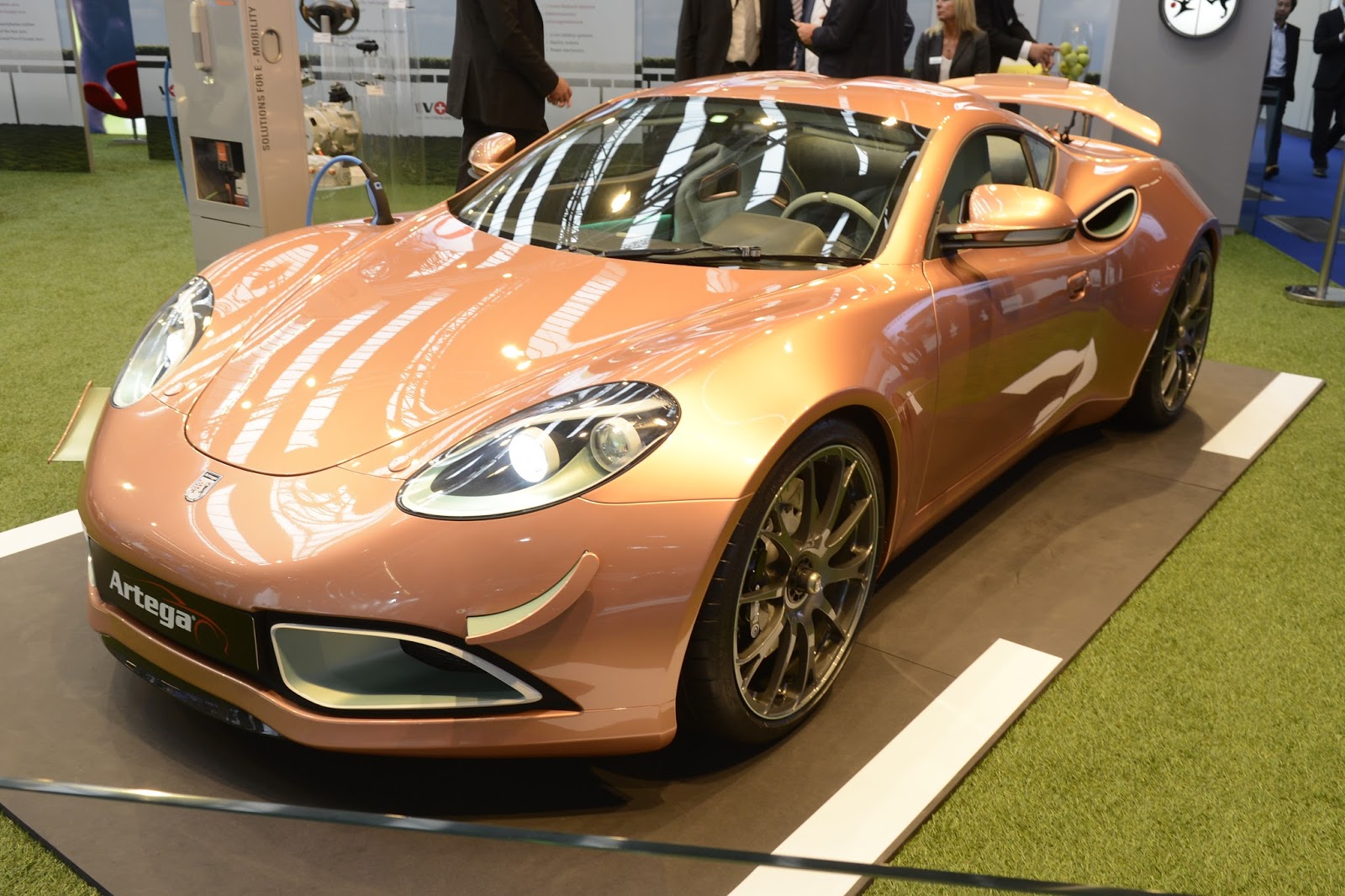
Artega Scalo - the all-electric sucessor of the Artega GT

Artega Scalo

In 2015 an electric version of the Artega GT was showcased, powered by two rear-mounted high power electric engines.  Its name was Scalo, after a winning Westphalian stallion with the same name.  This concept car sowed the seed for a further developed model, with much more power, greater performance and even greater range. The target range was 500km.   


The Artega Scalo with a purely electric drive is the direct successor of the Artega GT, which inspired car fans around the world. The new German electric sports car promises pure driving enjoyment with aerospace genes. 


An impressive acceleration of 0 to 60 mph in 3.6 seconds and an electronically limited maximum speed of 155 mph characterise the Artega Scalo. The range of up to 250 mls and the charging time are convincing as well. With a 64 kW DC quick charge, it is possible to charge the battery completely in less than one hour. 


The Artega Scalo has two Voltabox high-performance electrical motors with a total output of 300 kW and a torque of 575 ft-lb - using technology from aerospace. The energy storage is a world novelty: Lithium-ion battery modules, combined with perfectly customized SuperCaps (high-performance capacitors).


 Pursuing the electric power route Artega has dispensed with petroleum engines and wants to promote the switch to electromobility also in the arena of super sports cars. Consequently, Artega has now sold the know-how, the production facilities, and tools for the Artega GT to US company Saleen, which will build the vehicle with a different engines in China under its own brand. 


The focus of Artega is now on producing an exclusive car that embodies great looks, stunning performance, luxury and practicality, for customers with a unique lifestyle. The target is to become the alternative German super sports car maker, offering high performance cars for everyday use, with a car at the very top of its market segment.  

The Interior


About Artega and the Artega GT

The Company

 The German Artega GT sports car, which was first launched back in 2007, continues to be a real head-turner – both on the road and among the cognoscenti – with its still-innovative lightweight structural design and its maker’s special attention to the conservation of resources.
Artega GmbH, to give it its full name, has meanwhile returned to the family ownership of the company’s founder, Klaus Frers, who has taken on the mission of developing the Artega brand and putting the firm’s accumulated know-how to work in creating a sustainable corporate approach for carmakers and their suppliers. 


An extra feature was added in 2008 to Artega’s lightweight construction and onboard power-supply architecture: electric traction. Artega can now offer an unequalled range of products, thanks to its programme of cooperation with paragon AG (a supplier of electronics , display and control systems and body kinematics),  and a paragon subsidiary called Voltabox Deutschland GmbH (which produces li-ion battery systems and onboard chargers).
The outcome of all this is Artega already creating the intelligent mobility of the future.


Iconic Artega GT

 After a development phase lasting just 20 months, and a successful application for European short-production-run approval, the period from 2009 to 2012 saw the production and delivery of 153 Artega GT. The Artega GT continues even now to delight enthusiasts, and has won a place among the world’s best-known sports cars. 


Some specialist magazines have even earmarked the Artega GT as a “future classic”. Owners from Germany, Switzerland, Austria, Italy, the Netherlands, Belgium, France, Japan, Mexico, Malaysia and China are all equally fired up by the incredible driving experience that possessing this very special vehicle entails. 


The knowledge and skills gained from this extraordinary project have created a unique worldwide combination of expertise in many areas. The long list includes electronics, electromechanical and mechanical systems, kinematics, on-board network architecture, electric traction, simulation techniques, active and passive safety, innovative materials, lightweight construction, road testing, validation, homologation and type-approval, project management and small-scale series production. 


sexta-feira, 5 de maio de 2017

Maserati Mostro Zagato Coupe - A concept with history

 Developed to celebrate the centenary of the House of the Trident. What a "monster" this Mostro!


If you're into old school, chances are you are aware of the 1957 Maserati 450S Costin Zagato Coupe and its marvelous styling. A thoroughbred racing car turned grand tourer, chassis #4501 and Stirling Moss were a great team back in the 1950s.


Based on the racing pedigree and bewitching lines of the 450S Costin Zagato Coupe, the Italian marque and similarly Italian coachbuilder joined hands yet again to create a venerable successor to the veteran 450S.


The jaw-dropping gorgeous Maserati Mostro is the latest creation of Zagato's "Iconic decade," whatever that means. Don't try to look for a meaning to those words because it's a typically Italian thing. Slated to premiere at the Concorso d'Elegance Villa d'Este, this partnership between Zagato and Maserati will spawn 5 examples of the Mostro breed, all of them already spoken for.


Developed to celebrate the centenary of the House of the Trident, all Maserati Mostro units will be delivered before December 2015, at the end of the automaker's anniversary year and just in time for Christmas Eve.


A track-only machine with monstrous (no pun intended) performance, the two-seater super GT uses a carbon fiber chassis coupled to a mid-structure made of steel tubes and a subframe that sustains the fuel tank, rear suspension, transmission and exhaust. The body shell of the Italian GT is 100% carbon fiber.


The Engine


Animated by central-front mounted Maserati V8 with dry-sump lubrication, the Maserati Mostro's naturally aspirated tower-of-unspecified-power is mated to a semi-automatic six-speed transmission.
Chassis-wise, the 19-inch alloy wheels hide a track-focused pushrod suspension. If you're remotely curious about the pricing of this thing, tough luck with that. Told you this is how the cookie crumbles in Italy.


Zagato confirms that the Mostro is designed for the track, but will be "ready for street homologation." While its makers promise that like the original "il Mostro" it will dominate a racing circuit, it will be totally road legal too and it’s understood that the huge, fixed rear wing is removable for a better cruising aesthetic. The carrozzeria will build five examples before Maserati's current centenary year is over. Each has already been spoken for, though none are headed to customers in the US. Coachbuilders seldom reveal pricing for this type of project (particularly when they've all been pre-sold), but we're told that "none of Zagato's atelier cars exceed 1 million. As collectible cars, the value of a Zagato typically overcomes the purchasing price within a few years."

 The Interior


Sources: http://www.maseratimarin.com/blog/2015/may/22/maserati-mostro-zagato-production-limited-to-5-units.htm and http://fabwheelsdigest.blogspot.pt/2015/06/2015-maserati-mostro-zagato-coupe.html